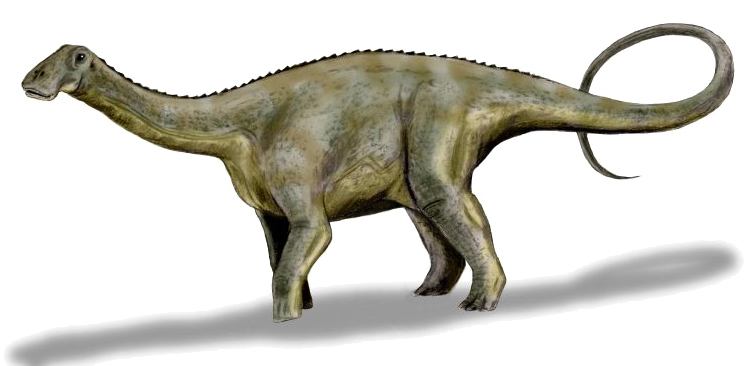
Nigersaurus
Artist's reconstructionNobu Tamura, CC BY 3.0

Nigersaurus

“Niger lizard”
SauropodomorphherbivoreEarly Cretaceous

The 'Mesozoic cow' whose vacuum-cleaner mouth held 500 teeth

Overview

Nigersaurus is a genus of rebbachisaurid sauropod dinosaur that lived during the middle Cretaceous period, about 115 to 105 million years ago. It was discovered in the Elrhaz Formation in an area called Gadoufaoua, in Niger. Fossils of this dinosaur were first described in 1976, but it was only named Nigersaurus taqueti in 1999 after further and more complete remains were found and described. The genus name means "Niger reptile", and the specific name honours the palaeontologist Philippe Taquet, who discovered the first remains.

Source: Wikipedia

Why it matters

  • Its wide, straight-edged muzzle carried batteries of tiny teeth replaced every few weeks.
  • Its skull bones were so thin that light passes through them, so it was first described from scraps.
  • Head held low, it grazed on ferns and horsetails near the ground.

Classification & discovery

Group
Dinosaur · Sauropodomorph · Rebbachisauridae
Parent taxon
Rebbachisaurinae
Diet
herbivore
Environment
terrestrial
Life habit
ground-dwelling, gregarious
Named
by Sereno et al. in 1999

When it lived

121.4 – 100.5 million years ago · Aptian to Albian · Cretaceous

PermianTriassicJurassicCretaceousPaleogene6080100120140160180200220240260280300End-Cretaceous extinction, 66 MaDimetrodon: 298.9–266.9 Ma · A sail-backed predator that is closer to mammals than to any dinosaurDimetrodonHerrerasaurus: 237–227.3 Ma · An early predator from the dawn of the dinosaurs, named after the goat herder who found itHerrerasaurusEoraptor: 233.6–227.3 Ma · One of the very first dinosaurs, a dog-sized omnivore from 231 million years agoEoraptorCoelophysis: 227.3–192.9 Ma · A slender Triassic predator found by the hundreds at Ghost RanchCoelophysisPlateosaurus: 227.3–199.5 Ma · The first big plant-eater: a two-legged Triassic forerunner of the sauropodsPlateosaurusMegalosaurus: 205.7–66 Ma · The first dinosaur ever named, in 1824, decades before the word 'dinosaur' existedMegalosaurusPlesiosaurus: 205.7–66 Ma · The long-necked sea reptile Mary Anning found, often mistaken for a dinosaurPlesiosaurusDilophosaurus: 201.4–184.2 Ma · A seven-metre Early Jurassic predator with twin head crests, and no venom or neck frillDilophosaurusHeterodontosaurus: 201.4–184.2 Ma · A fox-sized dinosaur with tusks, incisors and cheek teeth all in one mouthHeterodontosaurusCryolophosaurus: 199.5–184.2 Ma · The first dinosaur named from Antarctica, with a pompadour-like crestCryolophosaurusMamenchisaurus: 168.2–113.2 Ma · The longest neck of any animal: up to 15 metres, half of its bodyMamenchisaurusKulindadromeus: 168.2–165.3 Ma · A plant-eater with feather-like fuzz, suggesting all dinosaurs could grow feathersKulindadromeusAnchiornis: 168.2–152.2 Ma · The first dinosaur with its whole colour pattern reconstructedAnchiornisYi: 165.3–154.8 Ma · A pigeon-sized dinosaur with bat-like membrane wingsYiStegosaurus: 161.5–93.9 Ma · Plates on its back, spikes on its tail and a famously small headStegosaurusAllosaurus: 161.5–137.1 Ma · The top predator of the Jurassic plains of North AmericaAllosaurusBrachiosaurus: 157.9–143.1 Ma · The giraffe of the dinosaur world, with front legs longer than its hind legsBrachiosaurusDiplodocus: 157.9–143.1 Ma · A 26-metre whip-tailed giant known from some of the most complete sauropod skeletonsDiplodocusApatosaurus: 157.9–143.1 Ma · A stockier cousin of Diplodocus with an extraordinarily thick neckApatosaurusBrontosaurus: 154.8–143.1 Ma · The dinosaur that was declared a mistake in 1903 and resurrected in 2015BrontosaurusIguanodon: 154.8–66 Ma · The second dinosaur ever named, whose thumb spike was first mistaken for a nose hornIguanodonCompsognathus: 154.8–145.1 Ma · A chicken-sized hunter and the first dinosaur known from a complete skeletonCompsognathusSupersaurus: 154.8–143.1 Ma · Possibly the longest dinosaur known from reasonably complete remainsSupersaurusEuropasaurus: 152.2–149.2 Ma · A sauropod shrunk to the size of a cow by life on a small islandEuropasaurusArchaeopteryx: 149.2–121.4 Ma · The feathered 'first bird' that tied birds to dinosaurs two years after Darwin's OriginArchaeopteryxMaraapunisaurus: 149.2–143.1 Ma · The lost vertebra that may have belonged to the largest dinosaur of allMaraapunisaurusDeinonychus: 143.1–93.9 Ma · The claw that launched the Dinosaur RenaissanceDeinonychusCarcharodontosaurus: 143.1–72.2 Ma · An African giant with serrated, shark-like teeth, rediscovered after its bones were bombedCarcharodontosaurusBaryonyx: 139.1–110.1 Ma · A crocodile-snouted fish-eater found by an amateur in a Surrey clay pitBaryonyxPsittacosaurus: 137.1–100.5 Ma · The best-understood dinosaur: colour, skin, bristles and even its cloaca are knownPsittacosaurusUtahraptor: 137.1–132.6 Ma · The largest raptor, with a 24-centimetre killing clawUtahraptorSpinosaurus: 125.8–72.2 Ma · The longest predatory dinosaur, a sail-backed river hunter with a paddle tailSpinosaurusSinosauropteryx: 125.8–119.6 Ma · The first non-bird dinosaur found with feathers, and the first with a known colourSinosauropteryxYutyrannus: 125.8–119.6 Ma · A nine-metre tyrannosaur relative covered in shaggy feathersYutyrannusAmargasaurus: 125.8–121.4 Ma · A small sauropod with a double row of spines down its neckAmargasaurusConcavenator: 125.8–121.4 Ma · A Spanish predator with a strange hump before the hips and possible quill knobsConcavenatorMicroraptor: 121.4–113.2 Ma · A crow-sized dinosaur with four wings and glossy black feathersMicroraptorBorealopelta: 121.4–113.2 Ma · An armoured dinosaur so well preserved it looks like it is sleepingBorealopeltaOuranosaurus: 121.4–66 Ma · A sail-backed plant-eater from the Sahara, when it was a river deltaOuranosaurusNigersaurus: 121.4–100.5 Ma · The 'Mesozoic cow' whose vacuum-cleaner mouth held 500 teethNigersaurusPatagotitan: 113.2–100.5 Ma · The best-known of the super-giants: six individuals from one Patagonian ranchPatagotitanGiganotosaurus: 113.2–106.3 Ma · A South American predator that rivalled Tyrannosaurus in sizeGiganotosaurusLeaellynasaura: 113.2–110.1 Ma · A small polar dinosaur that lived through months of winter darknessLeaellynasauraArgentinosaurus: 110.1–106.3 Ma · Possibly the heaviest land animal ever, known from a handful of enormous bonesArgentinosaurusDeinocheirus: 100.5–66 Ma · For 50 years only a pair of 2.4-metre arms were known; the rest was a hump-backed, duck-billed surpriseDeinocheirusShantungosaurus: 100.5–66 Ma · The largest duck-bill and the biggest non-sauropod dinosaur knownShantungosaurusMosasaurus: 100.5–61.7 Ma · A giant marine lizard from the Maastricht chalk, the fossil that launched the idea of extinctionMosasaurusGallimimus: 93.9–66 Ma · The largest ostrich dinosaur, built for speed on the Gobi plainsGallimimusVelociraptor: 89.8–66 Ma · A turkey-sized, feathered hunter, not the man-sized monster of the moviesVelociraptorOviraptor: 89.8–72.2 Ma · Named an egg thief for a crime it did not commit: it was brooding its own nestOviraptorEdmontosaurus: 89.8–66 Ma · The duck-bill known from 'mummies' with skin, hooves and a fleshy crestEdmontosaurusPteranodon: 89.8–72.2 Ma · Not a dinosaur at all: a flying reptile with a seven-metre wingspan and a toothless beakPteranodonHadrosaurus: 85.7–66 Ma · The first dinosaur skeleton ever mounted for the public, in Philadelphia in 1868HadrosaurusTyrannosaurus: 83.6–66 Ma · The tyrant king: the most studied predator that ever walked the EarthTyrannosaurusTriceratops: 83.6–66 Ma · Three horns, a bony frill and the most common large herbivore of the final dinosaur ageTriceratopsAnkylosaurus: 83.6–66 Ma · A living tank with a bone-crushing tail clubAnkylosaurusParasaurolophus: 83.6–72.2 Ma · A duck-billed dinosaur whose metre-long crest worked like a tromboneParasaurolophusPachycephalosaurus: 83.6–66 Ma · A dome of solid bone 25 centimetres thick, probably for ramming rivalsPachycephalosaurusDreadnoughtus: 83.6–72.2 Ma · A giant named after battleships, known from an unusually complete skeletonDreadnoughtusMaiasaura: 83.6–72.2 Ma · The dinosaur that proved parents cared for their youngMaiasauraTroodon: 83.6–66 Ma · The 'smartest dinosaur', with big eyes and a big brain, now a name in troubleTroodonZuul: 83.6–72.2 Ma · An ankylosaur named after a movie demon, with skin and armour still in placeZuulCarnotaurus: 72.2–66 Ma · A horned predator with the smallest arms of any large theropodCarnotaurusTherizinosaurus: 72.2–66 Ma · A pot-bellied, long-necked theropod with metre-long claws, the longest of any animalTherizinosaurusNanotyrannus: 72.2–66 Ma · A small tyrannosaur or a teenage T. rex? One of palaeontology's longest argumentsNanotyrannusMajungasaurus: 72.2–66 Ma · The only dinosaur with direct evidence of cannibalismMajungasaurusAustroraptor: 72.2–66 Ma · The largest raptor of the southern hemisphere, with a long snout and short armsAustroraptor

Where it was found

Niger · Countries with fossils: NE

3 fossil occurrences in the Paleobiology Database · Rock formations: Elrhaz

Loading the map…

Size

Human, 1.8 m
Nigersaurus
Nigersaurus · Height 2.5 m
02468

Length 9 m · Mass 2 t · Size estimates are editorial, from the literature; silhouettes from PhyloPic.

Length
9 m
Height
2.5 m
Mass
2 t2,000 kg
First appearance
121.4 MaAptian
Last appearance
100.5 MaAlbian
Span of the fossil record
20.9 million years
Fossil occurrences
3NE
Year named
1999Sereno et al.

Sources

Image: Kabacchi, CC BY 2.0 · CC BY 2.0 · image page

Life restoration: Nobu Tamura, CC BY 3.0 · CC BY 3.0 · image page

Silhouette: Mike Hanson (PhyloPic) · license

Text: Wikipedia (CC BY-SA 4.0). Taglines, highlights and size estimates are editorial.