Overview Archaeopteryx, sometimes referred to by its German name, "Urvogel " is an extinct genus of bird-like dinosaurs. The genus name derives from the Ancient Greek ἀρχαῖος, meaning 'ancient', and πτέρυξ, meaning 'feather, wing'. Between the late 19th century and the early 21st century, Archaeopteryx was generally accepted by palaeontologists and popular reference books as the oldest known bird. Older potential avialans have since been identified, including Anchiornis, Xiaotingia, Aurornis, and Baminornis.
Source: Wikipedia
Why it matters A single feather and then a skeleton surfaced in Bavarian limestone in 1861, with teeth, a long bony tail and clawed fingers. Twelve skeletons are now known from the Solnhofen lagoons, about 150 million years old. It could probably flap in short bursts, more like a pheasant than a swift. Classification & discovery
Group Bird-line dinosaur · Theropod · NO_FAMILY_SPECIFIED
Parent taxon Avialae
Diet carnivore
Environment coastal
Life habit flying
Named by Meyer in 1861 When it lived 149.2 – 121.4 million years ago · Tithonian to Barremian · Jurassic, Cretaceous
Permian Triassic Jurassic Cretaceous Paleogene 60 80 100 120 140 160 180 200 220 240 260 280 300 End-Cretaceous extinction, 66 Ma Dimetrodon: 298.9–266.9 Ma · A sail-backed predator that is closer to mammals than to any dinosaur Dimetrodon Herrerasaurus: 237–227.3 Ma · An early predator from the dawn of the dinosaurs, named after the goat herder who found it Herrerasaurus Eoraptor: 233.6–227.3 Ma · One of the very first dinosaurs, a dog-sized omnivore from 231 million years ago Eoraptor Coelophysis: 227.3–192.9 Ma · A slender Triassic predator found by the hundreds at Ghost Ranch Coelophysis Plateosaurus: 227.3–199.5 Ma · The first big plant-eater: a two-legged Triassic forerunner of the sauropods Plateosaurus Megalosaurus: 205.7–66 Ma · The first dinosaur ever named, in 1824, decades before the word 'dinosaur' existed Megalosaurus Plesiosaurus: 205.7–66 Ma · The long-necked sea reptile Mary Anning found, often mistaken for a dinosaur Plesiosaurus Dilophosaurus: 201.4–184.2 Ma · A seven-metre Early Jurassic predator with twin head crests, and no venom or neck frill Dilophosaurus Heterodontosaurus: 201.4–184.2 Ma · A fox-sized dinosaur with tusks, incisors and cheek teeth all in one mouth Heterodontosaurus Cryolophosaurus: 199.5–184.2 Ma · The first dinosaur named from Antarctica, with a pompadour-like crest Cryolophosaurus Mamenchisaurus: 168.2–113.2 Ma · The longest neck of any animal: up to 15 metres, half of its body Mamenchisaurus Kulindadromeus: 168.2–165.3 Ma · A plant-eater with feather-like fuzz, suggesting all dinosaurs could grow feathers Kulindadromeus Anchiornis: 168.2–152.2 Ma · The first dinosaur with its whole colour pattern reconstructed Anchiornis Yi: 165.3–154.8 Ma · A pigeon-sized dinosaur with bat-like membrane wings Yi Stegosaurus: 161.5–93.9 Ma · Plates on its back, spikes on its tail and a famously small head Stegosaurus Allosaurus: 161.5–137.1 Ma · The top predator of the Jurassic plains of North America Allosaurus Brachiosaurus: 157.9–143.1 Ma · The giraffe of the dinosaur world, with front legs longer than its hind legs Brachiosaurus Diplodocus: 157.9–143.1 Ma · A 26-metre whip-tailed giant known from some of the most complete sauropod skeletons Diplodocus Apatosaurus: 157.9–143.1 Ma · A stockier cousin of Diplodocus with an extraordinarily thick neck Apatosaurus Brontosaurus: 154.8–143.1 Ma · The dinosaur that was declared a mistake in 1903 and resurrected in 2015 Brontosaurus Iguanodon: 154.8–66 Ma · The second dinosaur ever named, whose thumb spike was first mistaken for a nose horn Iguanodon Compsognathus: 154.8–145.1 Ma · A chicken-sized hunter and the first dinosaur known from a complete skeleton Compsognathus Supersaurus: 154.8–143.1 Ma · Possibly the longest dinosaur known from reasonably complete remains Supersaurus Europasaurus: 152.2–149.2 Ma · A sauropod shrunk to the size of a cow by life on a small island Europasaurus Archaeopteryx: 149.2–121.4 Ma · The feathered 'first bird' that tied birds to dinosaurs two years after Darwin's Origin Archaeopteryx Maraapunisaurus: 149.2–143.1 Ma · The lost vertebra that may have belonged to the largest dinosaur of all Maraapunisaurus Deinonychus: 143.1–93.9 Ma · The claw that launched the Dinosaur Renaissance Deinonychus Carcharodontosaurus: 143.1–72.2 Ma · An African giant with serrated, shark-like teeth, rediscovered after its bones were bombed Carcharodontosaurus Baryonyx: 139.1–110.1 Ma · A crocodile-snouted fish-eater found by an amateur in a Surrey clay pit Baryonyx Psittacosaurus: 137.1–100.5 Ma · The best-understood dinosaur: colour, skin, bristles and even its cloaca are known Psittacosaurus Utahraptor: 137.1–132.6 Ma · The largest raptor, with a 24-centimetre killing claw Utahraptor Spinosaurus: 125.8–72.2 Ma · The longest predatory dinosaur, a sail-backed river hunter with a paddle tail Spinosaurus Sinosauropteryx: 125.8–119.6 Ma · The first non-bird dinosaur found with feathers, and the first with a known colour Sinosauropteryx Yutyrannus: 125.8–119.6 Ma · A nine-metre tyrannosaur relative covered in shaggy feathers Yutyrannus Amargasaurus: 125.8–121.4 Ma · A small sauropod with a double row of spines down its neck Amargasaurus Concavenator: 125.8–121.4 Ma · A Spanish predator with a strange hump before the hips and possible quill knobs Concavenator Microraptor: 121.4–113.2 Ma · A crow-sized dinosaur with four wings and glossy black feathers Microraptor Borealopelta: 121.4–113.2 Ma · An armoured dinosaur so well preserved it looks like it is sleeping Borealopelta Ouranosaurus: 121.4–66 Ma · A sail-backed plant-eater from the Sahara, when it was a river delta Ouranosaurus Nigersaurus: 121.4–100.5 Ma · The 'Mesozoic cow' whose vacuum-cleaner mouth held 500 teeth Nigersaurus Patagotitan: 113.2–100.5 Ma · The best-known of the super-giants: six individuals from one Patagonian ranch Patagotitan Giganotosaurus: 113.2–106.3 Ma · A South American predator that rivalled Tyrannosaurus in size Giganotosaurus Leaellynasaura: 113.2–110.1 Ma · A small polar dinosaur that lived through months of winter darkness Leaellynasaura Argentinosaurus: 110.1–106.3 Ma · Possibly the heaviest land animal ever, known from a handful of enormous bones Argentinosaurus Deinocheirus: 100.5–66 Ma · For 50 years only a pair of 2.4-metre arms were known; the rest was a hump-backed, duck-billed surprise Deinocheirus Shantungosaurus: 100.5–66 Ma · The largest duck-bill and the biggest non-sauropod dinosaur known Shantungosaurus Mosasaurus: 100.5–61.7 Ma · A giant marine lizard from the Maastricht chalk, the fossil that launched the idea of extinction Mosasaurus Gallimimus: 93.9–66 Ma · The largest ostrich dinosaur, built for speed on the Gobi plains Gallimimus Velociraptor: 89.8–66 Ma · A turkey-sized, feathered hunter, not the man-sized monster of the movies Velociraptor Oviraptor: 89.8–72.2 Ma · Named an egg thief for a crime it did not commit: it was brooding its own nest Oviraptor Edmontosaurus: 89.8–66 Ma · The duck-bill known from 'mummies' with skin, hooves and a fleshy crest Edmontosaurus Pteranodon: 89.8–72.2 Ma · Not a dinosaur at all: a flying reptile with a seven-metre wingspan and a toothless beak Pteranodon Hadrosaurus: 85.7–66 Ma · The first dinosaur skeleton ever mounted for the public, in Philadelphia in 1868 Hadrosaurus Tyrannosaurus: 83.6–66 Ma · The tyrant king: the most studied predator that ever walked the Earth Tyrannosaurus Triceratops: 83.6–66 Ma · Three horns, a bony frill and the most common large herbivore of the final dinosaur age Triceratops Ankylosaurus: 83.6–66 Ma · A living tank with a bone-crushing tail club Ankylosaurus Parasaurolophus: 83.6–72.2 Ma · A duck-billed dinosaur whose metre-long crest worked like a trombone Parasaurolophus Pachycephalosaurus: 83.6–66 Ma · A dome of solid bone 25 centimetres thick, probably for ramming rivals Pachycephalosaurus Dreadnoughtus: 83.6–72.2 Ma · A giant named after battleships, known from an unusually complete skeleton Dreadnoughtus Maiasaura: 83.6–72.2 Ma · The dinosaur that proved parents cared for their young Maiasaura Troodon: 83.6–66 Ma · The 'smartest dinosaur', with big eyes and a big brain, now a name in trouble Troodon Zuul: 83.6–72.2 Ma · An ankylosaur named after a movie demon, with skin and armour still in place Zuul Carnotaurus: 72.2–66 Ma · A horned predator with the smallest arms of any large theropod Carnotaurus Therizinosaurus: 72.2–66 Ma · A pot-bellied, long-necked theropod with metre-long claws, the longest of any animal Therizinosaurus Nanotyrannus: 72.2–66 Ma · A small tyrannosaur or a teenage T. rex? One of palaeontology's longest arguments Nanotyrannus Majungasaurus: 72.2–66 Ma · The only dinosaur with direct evidence of cannibalism Majungasaurus Austroraptor: 72.2–66 Ma · The largest raptor of the southern hemisphere, with a long snout and short arms Austroraptor Where it was found Germany · Countries with fossils: DE, ES
10 fossil occurrences in the Paleobiology Database · Rock formations: Altmühltal, Camarillas, Mörnsheim, Painten, Solnhofen
Today When alive
Loading the map…
Size Human, 1.8 m Archaeopteryx · Height 0.3 m 0
Length 0.5 m · Mass 0.8 kg · Size estimates are editorial, from the literature; silhouettes from PhyloPic.
Length 0.5 m
Height 0.25 m
Mass 0.8 kg
First appearance 149.2 MaTithonian
Last appearance 121.4 MaBarremian
Span of the fossil record 27.8 million years
Fossil occurrences 10DE, ES
Year named 1861Meyer Sources Image: H. Raab (User: Vesta), CC BY-SA 3.0 · CC BY-SA 3.0 · image page
Life restoration: NobuTamura http://paleoexhibit.blogspot.com/ http://spinops.blogspot.com/, CC BY-SA 3.0 · CC BY-SA 3.0 · image page
Silhouette: T. Michael Keesey (PhyloPic) · license
Text: Wikipedia (CC BY-SA 4.0). Taglines, highlights and size estimates are editorial.
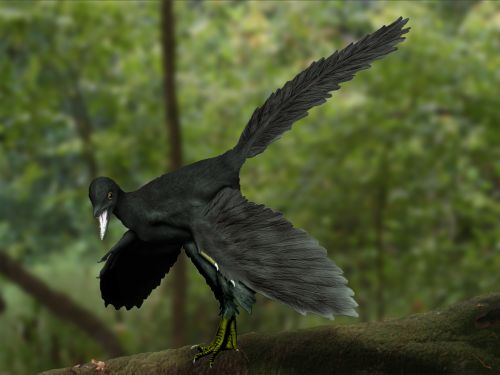 Artist's reconstructionNobuTamura http://paleoexhibit.blogspot.com/ http://spinops.blogspot.com/, CC BY-SA 3.0
